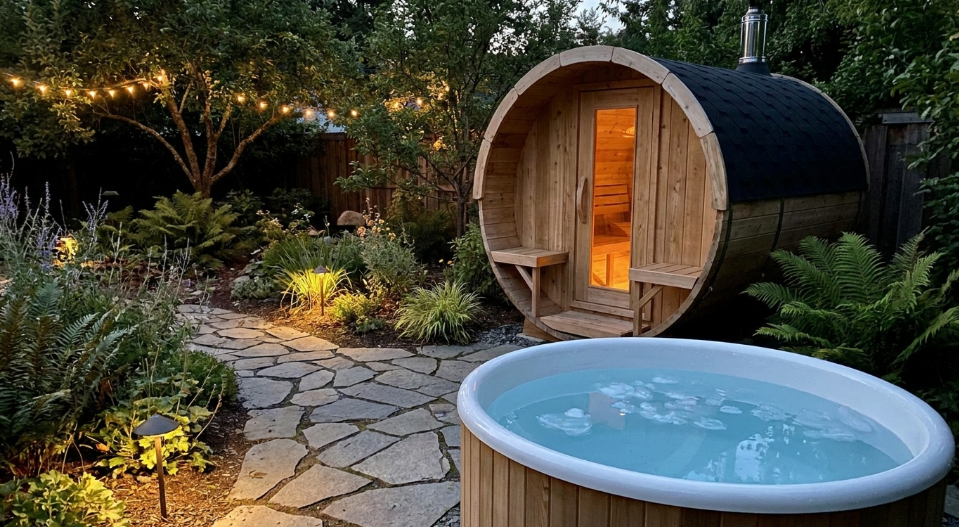
Out of everything sold alongside a home sauna, only a handful of accessories change how the room actually performs: a thermometer and hygrometer, a proper wood bucket and ladle, a basic headrest, and a timer. Chromotherapy lighting kits, aromatherapy diffusers, and premium branded towel sets look good in a photo but do little for the actual experience. Buyers who spend their accessory budget on the first group and skip the second usually end up happier with the room a year in, not just on delivery day.
Thermometer and Hygrometer: Worth It or Skippable?
Worth it, and one of the cheapest upgrades available. A combined thermometer and hygrometer, usually $15 to $30, replaces guesswork with an actual reading of temperature and humidity on the wall. Without one, it is easy to assume a room is hotter or more humid than it really is, especially for a first-time owner still learning how their particular heater and vent setup behaves. Analog dial versions are the standard choice since the heat and moisture inside a sauna are hard on anything with a digital display or battery.
Bucket and Ladle: Plastic vs. Wood
Wood wins here almost every time. A cedar or aspen bucket and ladle set, typically $25 to $60, tolerates sustained heat without warping and does not develop the faint plastic smell that cheap ladles can pick up once they have been warmed and cooled a hundred times. Plastic sets are fine in a pinch and cost less upfront, but they tend to get replaced within a year or two, which erases most of the initial savings. Some retailers, including SweatDecks, bundle a wood bucket and ladle with new cabin orders, which is worth checking before buying a separate set on top of the purchase.
Headrests and Backrests: Comfort vs. Clutter
A simple angled headrest, usually under $40, makes a real difference on longer sessions by keeping the back of the head off the hot wall panel. Backrests are a bit more of a personal call. A slatted wood backrest adds real comfort on the upper bench without trapping much heat or moisture behind it, while thick cushioned versions marketed for saunas tend to hold humidity and are harder to keep clean over time. One or two headrests per bench level covers most households; a full matching set of cushioned backrests is closer to clutter than upgrade for most rooms.
Sauna Stones: Is Upgrading Worth the Money?
Yes, within reason. Basalt or peridotite stones sized correctly for the heater, usually $30 to $70 for a full load, hold heat more evenly and crack less often than the generic stones sometimes bundled with budget heaters. Stones break down with use regardless of quality, and a scattering of dust or small fragments at the bottom of the heater box is the sign a fresh load is due, typically every one to three years depending on how often the room runs. Spending more on stones rated for the specific heater model is a better use of money than most of the other add-ons sold alongside a new sauna.
Lighting: Chromotherapy Kits vs. a Simple Dimmer
Skip the color-changing LED kits unless mood lighting is genuinely the point of buying a sauna in the first place. They add wiring complexity in a hot, humid space and rarely get used past the first few months once the novelty wears off. A single dimmable warm-white fixture, rated for high-heat enclosures, does the actual job, letting someone set the room bright for cleaning and low for a relaxed evening session, at a fraction of the cost and complexity of a multi-color system.
Timers and Sand Glasses: Useful or a Gimmick?
Genuinely useful, and cheap enough that skipping one does not save much. A basic sand timer or a simple mechanical dial timer, both usually under $20, keeps track of session length without anyone needing a phone inside the room. Built-in digital timers on higher-end heaters cover the same job automatically, so a standalone timer only matters as an add-on for heaters that do not already include one.
Towels, Floor Mats, and Other Basics Worth Having on Hand
These are not exciting purchases, but they get used every single session, which is more than can be said for most of the items on the skip list. A stack of plain cotton towels for sitting on and drying off, a rubber-backed floor mat for the entry area, and a small wall hook or two for robes cost very little and solve real, everyday friction. Linen or bamboo towels are marketed as a premium option, but plain cotton dries faster between sessions and holds up better against repeated heat exposure, which matters more day to day than how the fabric looks folded on a shelf. None of these need to be bought as a matching branded set; mismatched towels from a regular linen closet do the job just as well.
What the Research Says About Session Length and Frequency
None of this changes the underlying research on regular sauna use, which is built around consistent sessions rather than any particular accessory. Reviews summarized in Mayo Clinic Proceedings and in a broader review of Finnish sauna bathing and lifestyle factors associate regular use, several times a week over years, with favorable cardiovascular measures, based on long-running cohort data rather than any single session. A timer or a hygrometer helps someone stay in a comfortable, repeatable routine, which matters more for that association than any single accessory on this list.
Frequently Asked Questions
Do you need a hygrometer in a sauna? Not required, but a combined thermometer and hygrometer is a cheap way to stop guessing at conditions and confirm the room is in a comfortable range.
Is a wood bucket and ladle better than plastic? Generally yes. Wood holds up better against heat and does not develop the plastic smell cheap ladles can pick up over time.
Are chromotherapy lights worth adding? For most buyers, no. A simple dimmable warm-white light covers the actual need for less money and less wiring complexity.
Do sauna stones need to be replaced? Yes, periodically, usually every one to three years. Dust or fragments collecting at the bottom of the heater is the sign a fresh load is due.
References
- Cardiovascular and Other Health Benefits of Sauna Bathing: A Review of the Evidence, Mayo Clinic Proceedings, 2018.
- Does the Combination of Finnish Sauna Bathing and Other Lifestyle Factors Confer Additional Health Benefits? A Review of the Evidence, Mayo Clinic Proceedings, 2023.
- Clinical Effects of Regular Dry Sauna Bathing: A Systematic Review, Evidence-Based Complementary and Alternative Medicine, 2018.